AI Voice AgentsExplainer
How Do AI Receptionists Work? One Call, Step by Step
By Cognova AI, AI consultantsPublished
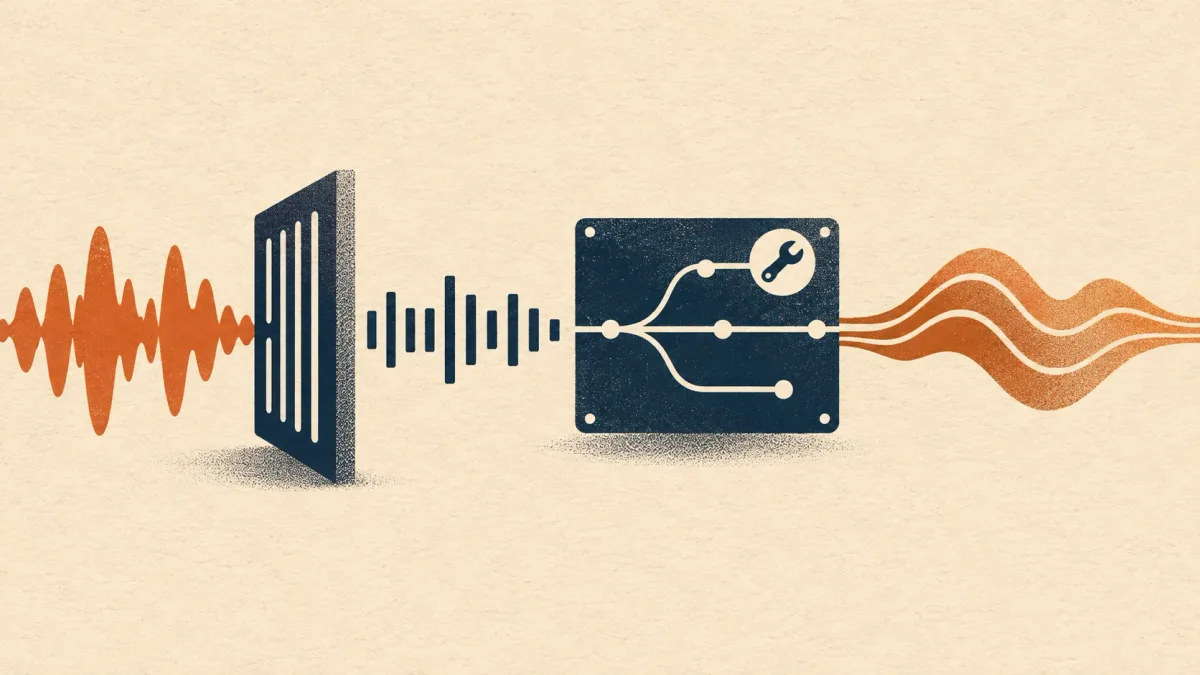
An AI receptionist answers your business phone, turns the caller's speech into text, uses a language model plus your business information to decide what to say or do, and replies in a natural voice. During the call it can book appointments, answer questions, take messages or transfer to a person, then sends your team a summary.
Key points
- Every call runs through three engines in a loop. Speech-to-text listens, a language model decides, and text-to-speech speaks.
- The language model only knows what you give it, such as hours, services, prices, policies and rules for what it must not do.
- Tools make it useful. Calendar, CRM and phone-system connections let it book, look up and transfer instead of only taking messages.
- Speed is what callers notice first. Pauses and talking over the caller are the most common reasons an AI receptionist feels robotic.
- Good setups hand off cleanly. Emergencies, complaints and complex sales go to a person with the context already captured.
A call, step by step
Here is what happens when someone calls a plumbing company at 9 pm and an AI receptionist answers.
- The call connects. Your phone number forwards to the voice platform, either always, after a few rings, or only after hours. The agent greets the caller with your business name and says it is an AI assistant.
- Speech-to-text listens. The caller says their water heater is leaking. A speech-to-text model transcribes the audio as they speak, and detects when they have finished talking.
- The language model decides. The transcript goes to a large language model with your instructions, such as service area, emergency rules, prices it may quote, and what it must never promise. It recognizes a possible emergency and follows your rule, asking whether water is actively leaking.
- Tools take action. For a non-emergency, it checks your field-service calendar and offers two morning slots. For an emergency, it transfers to the on-call technician or texts them right away.
- Text-to-speech replies. The model’s answer is spoken in a natural voice. Steps 2 to 5 repeat for every turn of the conversation, which is why speed matters.
- After the call. Your team receives a summary, the transcript, the caller’s details and the booking, and your CRM is updated.
What it connects to
An AI receptionist is only as useful as the systems it can reach.
- Phone system. Call forwarding or a SIP connection, so it can answer and transfer.
- Calendar or scheduling software. Needed to book rather than just take messages.
- CRM or practice-management system. Lets it recognize returning callers and log every call.
- Knowledge base. Hours, services, service area, prices and policies, written as plain facts it can repeat accurately.
- SMS and email. For confirmations to callers and alerts to your team.
Where AI receptionists struggle
- Noisy lines and heavy accents reduce transcription accuracy, which leads to wrong answers. Test with your real callers.
- Long pauses make callers talk over the agent. Delay usually comes from slow models, too many tool calls or a distant server region.
- Vague instructions lead to improvised answers. The agent needs explicit rules for prices, promises and emergencies.
- Edge cases such as complaints, legal questions and emotional callers belong with people.
What to check before you buy
Ask any vendor to let you call a live demo built on your own business information. Check how fast it responds, whether it books into your actual calendar, how it handles an interruption, what it does with an emergency, and how transfers work. Ask how you will see transcripts, and who updates the scripts when something goes wrong. Those answers matter more than the voice it uses.
How Cognova AI can help
We design, build and run AI receptionists for small businesses: call-flow design, scripts, calendar and CRM connections, hand-off rules and monthly tuning from real transcripts. See AI Voice Agents for SMBs for pricing and timelines, or the 9 calls an AI voice agent handles well.
Frequently asked questions
How does an AI receptionist understand callers?
The caller's audio is transcribed in real time by a speech-to-text model. A large language model then reads the transcript along with your business information and instructions, works out what the caller wants, and decides on a reply or an action such as checking the calendar. Modern models handle natural phrasing, interruptions and follow-up questions far better than old press-1 phone menus.
Can an AI receptionist book appointments?
Yes, if it is connected to your scheduling system. During the call it checks open slots, offers times, confirms the booking and can send a text confirmation. Without a calendar connection it can only take a message, so ask any vendor exactly which calendar, practice-management or field-service software it books into, and test a few bookings yourself before launch.
What happens when an AI receptionist cannot help?
A well-built AI receptionist follows hand-off rules you approve. It can transfer the call to a person, take a detailed message, or send your team an alert with the transcript and summary. Emergencies, upset callers and complex sales conversations should be routed to people by default, and the agent should say so plainly rather than keep trying.
Do I have to tell callers they are speaking to AI?
We recommend disclosing it at the start of every call, and some situations require it. The FCC has ruled that AI-generated voices in robocalls fall under existing robocall consent rules, and several states have their own disclosure and recording-consent laws. A short line such as "you're speaking with our AI assistant" keeps you safe without hurting the call.
Sources
Cite this article
Cognova AI. (2026, November 18). How Do AI Receptionists Work? One Call, Step by Step. Cognova AI. https://cognovaai.com/insights/how-do-ai-receptionists-work
Permanent link: cognovaai.com/insights/how-do-ai-receptionists-work. Quoting a passage? Select it and use “Copy quote” to get a link that jumps to that exact text.